The Created an Attitude of Hostility Toward Religious Images Art 111
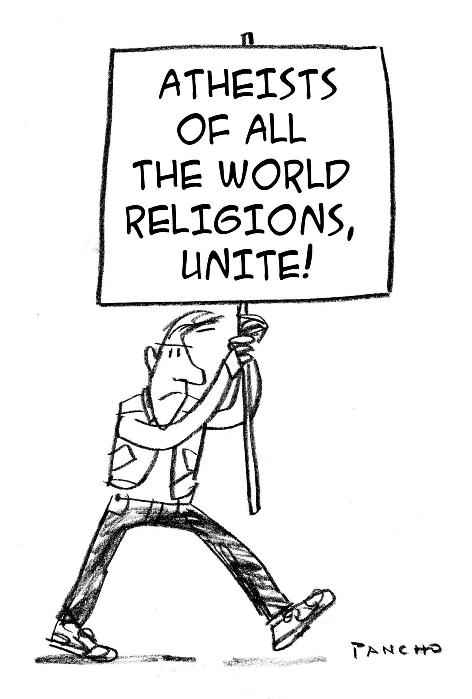
What is religion and conventionalities?
Belief is a state of the listen when we consider something true even though nosotros are not 100% certain or able to prove it. Everybody has beliefs about life and the earth they experience. Mutually supportive behavior may form belief systems, which may exist religious, philosophical or ideological.
Religions are belief systems that relate humanity to spirituality. The following definition from Wikipedia provides a good overview of the many dimensions of organized religion:
Faith is a collection of cultural systems, conventionalities systems, and worldviews that relate humanity to spirituality and, sometimes, to moral values. Many religions accept narratives, symbols, traditions and sacred histories that are intended to give meaning to life or to explain the origin of life or the universe. They tend to derive morality, ethics, religious laws or a preferred lifestyle from their ideas nearly the cosmos and man nature. […] Many religions have organised behaviours, clergy, a definition of what constitutes adherence or membership, congregations of laity, regular meetings or services for the purposes of veneration of a deity or for prayer, holy places (either natural or architectural), and/or scriptures. The practice of a organized religion may also include sermons, commemoration of the activities of a god or gods, sacrifices, festivals, feasts, trance, initiations, funerary services, matrimonial services, meditation, music, art, dance, public service, or other aspects of human culture. However, there are examples of religions for which some or many of these aspects of structure, conventionalities, or practices are absent.1
Behavior in the spiritual dimension of life accept existed since time immemorial. Many human societies have left us historical evidence of their systems of belief, whether it was worship of the sun, of gods and goddesses, noesis of good and evil or of the sacred. Stonehenge, the Bamiyan Buddhas, the Almudena Cathedral in Madrid, Uluru at Alice Springs, the Bahá'í Gardens of Haifa, Fujiyama, the sacred mountain of Japan, Kaaba in Kingdom of saudi arabia or the Golden Temple in Amritsar all deport testament to the homo experience of spirituality, which may be an objective reality or a upshot of the human yearning for an explanation of the meaning of life and our office in the earth.
In the simplest sense, religion describes "the relationship of homo beings to what they regard every bit holy, sacred, spiritual or divine".two It is usually accompanied by a set of organised practices which foster a community of people who share that religion. Every bit discussed higher up, belief is a broader term and information technology also includes "commitments which deny a dimension of existence beyond this world".iii
Religions and other belief systems in our surroundings have an influence on our identity, regardless of whether we consider ourselves religious or spiritual or not. At the same fourth dimension, other parts of our identity, our history, our approach to other religions and groups considered "unlike" will influence how we interpret that organized religion or belief system.
Question: What religions are practised in your country?
Religions and related social and cultural structures have played an of import part in human history. As mental structures, they influence the way we perceive the world around usa and the values we accept or pass up. As social structures, they provide a supporting network and a sense of belonging. In many cases, religions have become the ground of ability structures and have get intertwined with information technology. History, remote and recent, is full of examples of "theocratic" states, be they Christian, Hindu, Muslim, Jewish or other. The separation between state and faith is notwithstanding recent and only partly practical: at that place are official state religions in Europe and de facto land religions. In most cases this does non pose a particular problem as long as information technology is tempered past values of tolerance.
Statistics on organized religion or belief adherents can never be very accurate, considering the dynamic nature of this pattern too as the fact that many people amongst us live in contexts where freedom of religion and belief is not enjoyed. The statistics below are, therefore, intended to exemplify the multifariousness of the global picture. The figures betoken the estimated number of adherents of the largest religions4:
| African Traditional and Diasporic: | 100 million |
| Baha'i: | 7 meg |
| Buddhism: | 376 million |
| Cao Dai: | 4 one thousand thousand |
| Chinese traditional religion: | 394 million |
| Christianity: | two.1 billion |
| Hinduism: | 900 million |
| Islam: | 1.5 billion |
| Jainism: | four.2 million |
| Judaism: | 14 million |
| Neo-Paganism: | 1 1000000 |
| Primal-indigenous (tribal religionists, ethnic religionists, or animists): | 300 1000000 |
| Rastafarianism: | 600 k |
| Shinto: | four million |
| Sikhism: | 23 milllion |
| Spiritism: | 15 million |
| Tenrikyo: | 2 one thousand thousand |
| Unitarian-Universalism: | 800 thousand |
| Zoroastrianism: | 2.6 one thousand thousand |
The number of secular, non-religious, agnostic and atheists is estimated at 1.1 billion.
Question: Which religions are missing in this list?
Dissimilar religions and behavior take long existed in the European region equally well. In some historical periods, Europe has provided refuge to persecuted religious groups and immune a diversity of religions and beliefs to flourish. At other times, however, European countries take fallen prey to fanaticism and been engrossed in "religious wars", such equally the Thirty Years War of 1618-1648 that led to the slaughter of one-tertiary of the continent's population.
The misuse, or corruption, of religious arguments has led to the justification of painful conflicts and wars, persecutions and intolerance. Regardless of how we empathise these historical legacies, a wide range of religions and behavior exist in Europe and they have and go along to have an impact on our societies. In this style, religion and belief are important factors to consider in relation to immature people and youth work because, directly or indirectly, they have an touch on young people's identity and sense of belonging.
Freedom of religion or belief in man rights instruments
Everyone has the correct to freedom of idea, conscience and organized religion; this right includes freedom to change his religion or belief, and freedom, either solitary or in customs with others and in public or individual, to manifest his organized religion or belief in teaching, exercise, worship and observance.
Universal Declaration of Man Rights, Article xviii
This was afterward confirmed in the International Covenant on Civil and Political Rights also every bit in several regional bounden human being rights documents, such as the African Lease on Human and People'south Rights (Commodity eight) or the European Convention on Human being Rights and Fundamental Freedoms (Commodity 9).
The Un Human being Rights Commission emphasises that this liberty is "far-reaching and profound", that information technology "encompasses liberty of thought on all matters, personal conviction and the commitment to religion or belief, whether manifested individually or in customs with others", that the freedom for conscience should be equal to that for religion and belief and that protection is for "theistic, not-theistic and atheistic beliefs, besides as the correct not to profess whatsoever organized religion or belief".5 Accordingly, any serious conventionalities or confidence – whether a person is Sikh, confronting hunting, pacifist, Mormon, vegan or ideologically driven by activism confronting climate change – can be protected within this right.
This freedom in international law was historically focused on the religious liberty of minority communities. Today, laws securing freedom of religion and conventionalities are no longer focused on the need to maintain the condition quo in order not to undermine regional security, but spotlight a number of concerns including non-discrimination, equality and nobility. Championing this freedom has societal as well as individualist rationales, allowing people the scope to (openly) seek, (vigorously) discuss and (freely) uphold the beliefs that they choose, alone or along with others. Achieving an enabling environs for this freedom requires not simply non-interference on the grounds of religion or belief by the land but positive measures to be taken to achieve and maintain such an surround in lodge at large. In practice, this should include, for example, the possibility to make available places of worship or to provide moral and religious education.
Question: Are you a member of any religious community? How did you go involved?
As with all other human being rights, this freedom does not "trump" other freedoms and it sometimes finds itself in tension with other man rights, such as freedom of opinion and expression and freedom from discrimination on the grounds of sex or sexual orientation. This is reflected for case in the way Commodity nine of the European Convention on Homo rights is structured: there is an accented protection of the right to religious conventionalities, conscience and thought, just the manifestations only enjoy a qualified protection in so far every bit they do non violate other human rights.
European Convention on Man Rights and Primal Freedoms
Article 9
1. Everyone has the right to freedom of idea, conscience and religion; this right includes liberty to change his religion or belief, and freedom,
either alone or in community with others and in public or private, to manifest his religion or conventionalities, in worship, teaching, practise and observance.
2. Freedom to manifest one'due south faith or beliefs shall exist subject only to such limitations equally are prescribed past law and are necessary in a democratic
society in the interests of public safety, for the protection of public order, wellness or morals, or the protection of the rights and freedoms of others.
Freedom of religion and belief – including freedom to change religion – is essential to all of us, in our search for significant, our full evolution, our identity and our expression as members of a customs or communities. Whether we have a business firm religion or belief, whether we are undecided, or even if we do not really care much for religion or belief, this freedom matters to people and the societies they build.
Are there any communities in your country that practise non enjoy the aforementioned level of liberty of religion and conventionalities as others?
Challenges to and violations of the liberty of organized religion or belief
Throughout religious history, many religious and societal features have been embedded in the environment where a item organized religion was practised, and they are reflected in civilisation and politics. Many pieces of literature, poetry, fine art and music, clothes codes and means of organising life together take been drawn from religions. Faith has made a stiff imprint on culture, which can be seen, for example, on holy days, at feasts, in marriage ceremonies, burying practices, pilgrimages, the wearing of religious symbols (e.g. jewellery or wearing apparel codes), or in physical alterations to the body, such as male circumcision.
The influence of religions may become even stronger when nations prefer a state religion or religious ideology. In such situations, religion and religious arguments may become confused with the political, economical or social reasoning.
The extent to which freedom of thought, censor and organized religion allow distinctive practices of a community of believers to diverge from those of the rest of the club is often debated within the human rights community. Examples of this include attitudes towards women in religious leadership positions, traditional ceremonies involving children, laws surrounding matrimony, divorce or burial, prohibition on the delineation of divine beings or other religious figures, and so on.
In such contexts, the human rights bodies would criticise harmful practices, regardless of whether they were traditionally condoned past detail cultures, nations or religions. Such criticism is not an attack on culture, nationality or religion just an try to strike a balance between the right to one'southward religions and belief and other man rights, since several of these practices tin event in serious man rights abuse. Harmful traditional practices include female person genital mutilation, son-preference (which can manifest itself in sex-selective abortion, failing to care for newborn girls, discrimination in education in favour of sons, discrimination in diet), bundled or forced marriages, marriage of children, dowry-related crimes and crimes justified past "honor", exclusion or limitation of some rights of non-adherents to a more powerful religious group in a given customs, segregation according to religious lines, and and then on. Such practices unduly bear upon women and children: invoking tradition is used to justify discrimination on the basis of gender and age. Furthermore, in several cases, situations which, from a human rights perspective, are a violation of man dignity, remain unrecognised, taboo and unpunished. Few of these practices are based on religious precepts; the fact that they are deeply anchored in culture and tradition do not make ending them any easier. Changes have to come up through legislative change, educational activity and empowerment.
Throughout history, religions accept played a crucial role in imposing limitations on man activity in order to protect the physical and psychological integrity or dignity of other people. Yet, even though religious philosophies have contributed to the evolution of a conscience of human rights and dignity, the human rights related to religion and belief are no more exempt from the tensions and contradictions that are present in human being rights instruments, than are other rights. Every bit seen in the example of harmful traditional practices, sometimes convictions or beliefs are used to justify outright physical harm with severe health consequences.
Question: Are there religious practices in your community/ies that y'all consider harmful?
Discrimination and intolerance
on grounds of religion or belief
Religious intolerance tin be observed at different levels: amid adherents of the same religion (intra-religious intolerance); between one organized religion or religious mental attitude and another, manifesting itself in various forms of conflicts between persons and groups of persons (inter-religious intolerance); in the grade of confrontational disbelief or confrontational theism, which are intolerant of complimentary choice and exercise of other religions or belief commitments; or in the form of anti-secularism. Religious intolerance is often confused with xenophobia and other forms of discrimination; sometimes it is likewise used to justify discrimination.
Most homo rights violations related to freedom of faith and belief are also related to freedom from bigotry. Bigotry on the grounds of religion and conventionalities is contrary to human being rights only it is even so experienced daily by many people across Europe. The fact that religion and belief are often dislocated with culture, nationality and ethnicity makes it more complicated merely as well more painful on an individual level: y'all may be discriminated against on the grounds of religious amalgamation even if yous happen not to believe in the religion you are associated with.
Discrimination and intolerance touch negatively on society as a whole, and peculiarly on young people who feel information technology. Such effects include:
- Depression self-esteem
- Self-segregation
- Internalised oppression
- Disengagement from school activities
- Non-fulfilment of their potential
- Attraction to violent extremist ideologies
- School drib-out
- Health problems / low6
Religious intolerance is likewise used to feed hatred in, and to contribute to, armed conflicts, not so much considering it is the cause of conflict but considering religious belonging is used to draw dividing lines, equally armed conflicts in the Balkans and Caucasus demonstrate. The consequences of international terrorism and the "wars on terrorism" have been particularly devastating in Europe and beyond, notably because religious intolerance becomes mixed with xenophobia and racism.
No single social group, religion or customs has the monopoly of bigotry. Even though the levels of protection of the freedom of religion and conventionalities vary significantly across the member states of the Council of Europe, religious intolerance and bigotry affects everyone in Europe.
Intolerance and discrimination
confronting Muslims (Islamophobia)
Of item concern in several European countries is the rise of Islamophobia, the fear and hatred of Islam, resulting in discrimination against Muslims or people associated with Islam. Islam is the most widespread organized religion in Europe later Christianity and the majority religion in various member states of the Quango of Europe. The hostility towards Islam equally a organized religion and to Muslim people, especially following the "wars on terror", has revealed deep-rooted prejudices against Muslims in many European societies. With the perception of the religion of Islam as being associated just with terrorism and extremism, Islamophobia has contributed to negative views of Islam and Muslims, wrongly generalising militant religious extremism and ultra-conservatism onto all Muslim countries and Muslim people. This intolerance and stereotyped view of Islam has manifested itself in a number of ways, ranging from verbal or written abuse of Muslim people, discrimination at schools and workplaces, and psychological harassment or force per unit area, to outright fierce attacks on mosques and individuals, especially women who wearable headscarves.7 In this context, mass-media has played a role, offer at times representations of Muslim people which were distorted, if not outright stereotyped and defamatory.
Like other victims of discrimination grounded on religious amalgamation, discrimination against Muslims may overlap with other forms of discrimination and xenophobia, such as anti-immigrant sentiments, racism and sexism.
Vi recurring prejudices near Muslims All the same:
All are motivated by organized religion: It is thought that the unmarried most of import thing about Muslims, in all circumstances, is their religious organized religion. And then, if Muslims engage in violence, for example, it is assumed that this is because their religion advocates violence.
Totally "other": Muslims are seen every bit totally "other": they are seen as having few if any interests, needs or values in common with people who do non have a Muslim background.
Culturally and morally inferior: Muslims are seen as culturally and morally inferior and prone to being irrational and violent, intolerant in their handling of women, contemptuous towards world views different from their ain, and hostile and resentful towards "the West" for no skillful reason.
Threat: Muslims are seen as a security threat, in tacit or open sympathy with international terrorism and bent on the "Islamisation" of the countries where they live.
Co-operation is impossible: Every bit a issue of the previous five perceptions, it is claimed that in that location is no possibility of active partnership between Muslims and people with different religious or cultural backgrounds.
Guidelines for Educators on Countering Intolerance and Discrimination confronting Muslims, OSCE/ODIHR, Quango of Europe and UNESCO.
Anti-Christian sentiments (Christianophobia)
Christianophobia refers to every grade of discrimination and intolerance against some or all Christians, the Christian religion, or the practice of Christianity. Like other forms of discrimination based on religion, the perpetrators may exist people from other religions – ofttimes the majority religions – equally much as secular institutions. Hostility against Christians manifests itself in attacks confronting places of worship, exact abuse and, particularly in countries where Christians are a minority, restrictions on building and sometimes preserving churches or monasteries.
Particularly worrying is the ascent in attacks against Christians in the Middle East. A recommendation of the Parliamentary Assembly on this affair calls, amongst other things, for the need to "raise awareness well-nigh the need to combat all forms of religious fundamentalism and the manipulation of religious beliefs for political reasons, which are so often the cause of present 24-hour interval terrorism. Education and dialogue are ii important tools that could contribute towards the prevention of such evils"8.
Question: Have you ever experienced any bias towards you because of your organized religion or belief? How did you lot react?
Antisemitism
Antisemitism – hostility towards Jews as a religious or minority grouping often accompanied by social, economic, and political bigotry – is an instance of the combination of racism and religious discrimination. Even though the direct targets of antisemitism are Jewish people, the motivation for discrimination and violence is non necessarily based on Judaism equally a religion but on Jews as a people.
Reports from human rights organisations regularly state an alarming rise in the number of antisemitic attacks accompanied, in some countries, past the rise of openly antisemitic speech in the political arena. Events include attacks confronting Jewish schools, "while Jewish pupils were assaulted, harassed, and injured in growing numbers on their way to and from schoolhouse or in the classroom, including by their classmates. Educators report that the term "Jew" has go a popular swearword among youngsters."9 Rather than beingness confined to extremist circles, Antisemitism is thus increasingly being mainstreamed.
In its Recommendation No. 9 on the fight against Antisemitism, adopted in 2004, the European Commission Against Racism and Intolerance recommends, amongst others, member states to ensure that criminal law penalises antisemitic acts such as:
public incitement to violence, hatred, bigotry, public insults, defamation and threats aimed at a person or a grouping of persons on the grounds of their bodily or presumed Jewish identity or origin
the public expression, with an antisemitic aim, of an credo which depreciates or denigrates a grouping of persons on the grounds of their Jewish identity or origin
the public denial, trivialisation, justification or condoning, of the Shoah and of crimes of genocide, crimes against humanity or state of war crimes committed confronting persons on the grounds of their Jewish identity or origin
the desecration and profanation, with an antisemitic aim, of Jewish holding and monuments
the creation or the leadership of a grouping which promotes Antisemitism.
Religious intolerance and bigotry is non express to Antisemitism, Christianophobia or Islamophobia. Amidst the many forms of discrimination is the non-recognition of some religions and the divergence of treatment between them. Religions and systems of belief can thus exist banned, persecuted or closely controlled because of their alleged "sectarian" nature or their irrelevance on the grounds of being "insignificant".
It is important to recall that liberty of faith and conventionalities includes the correct to alter religion and the right not to adhere to, or declare, a faith.
Question: What happens if you decide to adopt a faith dissimilar from your family and customs?
Despite the growing and widespread manifestations of religious intolerance, information technology is important to deport in heed that religion and human rights are perfectly compatible and that only a homo rights framework can secure freedom of faith and belief for all.
The history of Europe is, indeed, full of examples of violence and barbarity in the name of organized religion. These acts have been and are being committed by men and women, not allowable by religious precepts, but by people.
Fortunately, the history and the reality of our world is besides a living prove of the optimism of religious diverseness: no single gild is mono-religious and no unmarried system of thought has ever prevailed, even under the most extreme forms of totalitarianism. Furthermore, the examples of people accepting each other despite religious divergence, and ofttimes united in diversity, are many more than those of intolerance.
The work of the Council of Europe
The Council of Europe, White Paper on Intercultural Dialogue "Living Together as Equals in Dignity" (2008) recognises that a range of religious and secular conceptions of life have enriched the cultural heritage of Europe and notes the importance of inter-religious, intra-religious and other dialogue for the promotion of understanding between different cultures. Information technology also emphasises that the Quango of Europe "would remain neutral towards the various religions whilst defending the liberty of thought, conscience and religion, the rights and duties of all citizens, and the respective autonomy of country and religions".ten
Promoting religious tolerance and inter-organized religion dialogue is as well one of the priorities of the Quango of Europe'southward youth policy. A number of events organised under the All Dissimilar – All Equal campaign in 2007-2008 developed recommendations and action plans for promoting inter-religious dialogue in European youth piece of work, including the Istanbul Youth Announcement on Inter-Religious and Intercultural Dialogue in Youth Piece of work12, and the Kazan Action Planxiii. All of these documents stress the crucial part of immature people and youth organisations in contributing to the alter towards religious tolerance.
The sphere of education may be a platform for tensions of homo rights related to religion and belief, as in cases where the educational content has been criticised as limiting the freedom of faith and conventionalities, or in cases where religious symbols used by schools or by students have resulted in conflicts. At the same fourth dimension, teaching is also one of the most important spheres of life where stereotypes and prejudices can be counteracted. In this spirit, ODIHR, the Council of Europe and UNESCO published the Guidelines for Educators on Countering Intolerance and Discrimination against Muslims.14 This document is intended to back up teachers, teacher trainers, teaching policy experts also equally not-governmental organisations active in the field of not-formal education in their piece of work against Islamophobia.
Religion and belief at the European Court of Homo Rights Folgerø and others v. Norway (2007)
Parents successfully appealed to the court in Strasbourg to avoid mandatory religious classes of one particular denomination of Christianity. The court found that the state was in violation of Article 2 of Protocol no. 1, which reads, "No person shall be denied the right to education. In the practise of any functions which information technology assumes in relation to education and to teaching, the Land shall respect the right of parents to ensure such didactics and teaching in conformity with their own religious and philosophical convictions".
Lautsi 5. Italy (2011)
Ms Lautsi's children attended a state school where all the classrooms had a crucifix on the wall, which she considered contrary to the principle of secularism past which she wished to bring upward her children. She complained before the Court that this was in breach of Article 9 (freedom of thought, conscience and religion) and of Article two of Protocol No. 1 (right to teaching).
The Courtroom establish no violation; it held in item that the question of religious symbols in classrooms was, in principle, a matter falling within the margin of appreciation of the state, provided that decisions in that area did not lead to a course of indoctrination and there was cypher to propose that the authorities were intolerant of pupils who believed in other religions, were non-believers or who held non-religious philosophical convictions.
Ercep v. Turkey (2011)
This example concerned the refusal by the applicant, a Jehovah's Witness and conscientious objector, to perform armed forces service for reasons of conscience and his successive convictions for that reason.
The Court found a violation of Article 9 and a violation of Article 6 (right to a off-white trial). It
invited Turkey to enact legislation concerning conscientious objectors and to innovate an alternative grade of service.
The Framework Convention on the Protection of National Minorities also protects religion as an element of the identity of minorities, "The Parties undertake to promote the conditions necessary for persons belonging to national minorities to maintain and develop their culture, and to preserve the essential elements of their identity, namely their religion, language, traditions and cultural heritage" (Commodity five) and prohibits forced assimilation.
Youth piece of work and religion and belief
Religion is an issue that many young people bargain with in their daily lives at dwelling, in public, at work or at schoolhouse. Youth work can help to make religious differences a cistron of cultural enrichment for immature people instead of being a source of confrontation, especially through the lenses of mutual agreement, tolerance and credence of departure.
Whether working at a local, regional or international level, youth workers demand to exist aware of the potential role and influence of faith and belief on the process of any given activity, as well equally on the planned objectives of the activity. Accepting diversity is a expert starting signal; building on diversity as a source of force is an splendid way to keep. A growing number of youth organisations are actively working in the field of inter-religious dialogue, promoting a dialogue between equals, and existence self-disquisitional of their own religious traditions, with the aim of increasing understanding.
Taking into consideration differences of belief and practice within the grouping, before and during the activity, tin can contribute to a better atmosphere in the group from the outset. Knowing about some of the rituals and practices of different religions can be very useful and important for the proficient functioning and success of youth events. Consideration of dietary laws, places and times for prayer, the religious calendar and daily practices of different religious groups (e.g. the Sabbath, Friday prayers, Ramadan, Sunday celebrations, holidays) might assist the organisers of youth activities provide a respectful and peaceful temper as well equally avoid bug of travel and of timing and efficiency of activities. The particularities of the place of the activity and the expectations of the hosting environs are equally important, in lodge to evidence respect for the needs of the grouping participants.
A degree of sensitivity towards religious diversity inside the group would create a certain positive and motivating attitude and marvel towards the religious practices and beliefs of others. This might too help to promote mutual respect and agreement, while helping to overcome any strong prejudices related to religious beliefs and practices.
Question: What importance does religious tolerance have in your work with young people?
There is a large amount of youth work that is faith-based, and at that place are many faith-based youth organisations. The Council of Europe's youth sector works closely with a diversity of international youth organisations that are faith-based and encourages co-performance amongst them. Report sessions and training activities at the European Youth Centre regularly include organisations such every bit:
- Ecumenical Youth Quango in Europe
- European Alliance of YMCAs
- European Baha'i Youth Quango
- European Fellowship of Christian Youth
- European Matrimony of Jewish Students
- Forum of European Muslim Youth and Student Organisations
- International Federation of Cosmic Youth Organisations
- International Movement of Catholic Agronomical and Rural Youth Europe
- International Young Catholic Students – International Movement of Catholic Students
- Islamic Conference Youth Forum for Dialogue and Co-performance
- Pax Christi Youth Forum
- Syndesmos – Earth Fellowship of Orthodox Youth
- Syriac Universal Alliance
- The European Young Women's Christian Association
- World Pupil Christian Federation
Some of these organisations got together within the framework of the European Youth Forum and constituted the Faith-Based Group of youth organisations in social club to larn virtually each other, promote diverseness and fight discrimination and hatred. Integrated by the European Peer Training Organisation, the European union of Jewish Students, the Ecumenical Youth Council in Europe, the Forum of European Muslim Youth and Student Organisations, the International Federation of Catholic Youth Organisations, the International Motion of Catholic Students, Pax Christi International and the World Student Christian Federation, the Good Grouping produced, in 2008, a Tool Kit on inter-religious dialogue in youth piece of work – Living Faiths Together. The Tool Kit, published past the European Youth Forum, provides information about monotheistic religions and proposes several methodologies and activities to sympathise and de-construct prejudices and stereotypes related to organized religion and to promote inter-religious dialogue. The tool kit may be downloaded from the Internet site of the European Youth Forum (www.youthforum.org) or from the site of the co-operating organisations.
Endnotes
1 http://en.wikipedia.org/wiki/Organized religion (accessed on nine July 2012)
2 Faith (2007) Encyclopædia Britannica at: world wide web.britannica.com/eb/article-9063138
iii LindaWoodhead, with Rebecca Catto: "Organized religion or belief": Identifying bug and priorities. Equality and Human Rights Commission, 2009, p. 3: www.equalityhumanrights.com/uploaded_files/inquiry/research_report_48__religion_or_belief.pdf
4 Major Religions of the Earth Ranked past Number of Adherents: www.adherents.com/Religions_By_Adherents.html
v General Comment 22 of the Un Homo Rights Committee on Article xviii of the ICCPR
6 OSCE/ODIHR, Council of Europe, UNESCO, Guidelines for Educators on Countering Intolerance and Discrimination confronting Muslims, 2011
vii Off-white (Forum Against Islamophobia and Racism), available at: www.fairuk.org/introduction.htm
eight Recommendation 1957 (2011) of the Parliamentary Assembly of the Council of Europe "Violence against Christians in the Eye Due east"
9 OSCE-ODIHR and Yad Vashem, Addressing Anti-Semitism: Why and How? A Guide for Educators, 2007
10 Council of Europe, White Paper on Intercultural Dialogue "Living together as equals in dignity", Launched past the Quango of Europe Ministers of Foreign Affairs at their 118th Ministerial Session (Strasbourg, seven May 2008), p. 23, bachelor at: www.coe.int/t/dg4/intercultural/Source/Pub_White_Paper/White%20Paper_final_revised_EN.pdf Encounter also San Marino Declaration of 2007
11 www.coe.int/t/dg4/education/edc/Source/Pdf/Coordinators/2006_14_CDED_ReligiousDiversity.pdf
12 "Istanbul Youth Declaration on Inter-Religious and Intercultural Dialogue in Youth Piece of work", Symposium Inter-religious and Intercultural Dialogue in Youth Work, Istanbul, Turkey, 27-31 March 2007: www.coe.int/t/dg4/youth/Source/Resources/Documents/2008_Istanbul_Declaration_en.pdf
13 "Kazan Action Programme", International Youth Forum "Intercultural Dialogue and its Religious Dimension", Kazan, Republic of Tatarstan, Russian Federation, thirty November – iv December 2008: www.coe.int/t/dg4/youth/Source/Resources/Documents/2008_Kazan_Action_Plan_en.pdf
14 Guidelines for Educators on Countering Intolerance and Discrimination against Muslims, OSCE/ODIHR, Council of Europe, UNESCO, 2011: www.coe.int/t/dg4/education/edc/resource
Source: https://www.coe.int/en/web/compass/religion-and-belief
0 Response to "The Created an Attitude of Hostility Toward Religious Images Art 111"
Post a Comment